

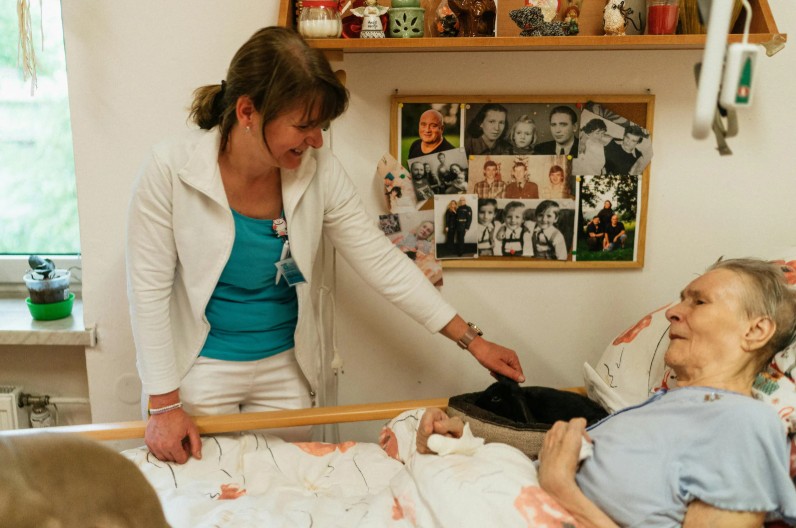
Navigating the NDIS pricing arrangements can feel complex, especially when it comes to billing for high-intensity supports. Two of the most commonly confused categories are High Intensity Daily Personal Activities (Mod 1) and High Intensity Supports. Understanding the difference is essential for providers to remain compliant and avoid under- or over-claiming.
What Are High Intensity Daily Personal Activities (Mod 1)?
High Intensity Daily Personal Activities (often called Mod 1) refer to support items listed under the Assistance with Daily Life support category, but which require a higher level of skill, knowledge, or risk management. The “Mod 1” designation indicates that the participant requires complex support due to their health or behavioural needs.
This means that the support worker must have advanced training or direct supervision from a qualified professional to safely complete the activity. Examples include supporting participants with:
Complex Bowel Care
Enteral Feeding and Management
Severe Dysphagia Management
Tracheostomy Management
Urinary Catheter Management
Ventilator Management
Subcutaneous Injections
Complex Wound Management
From a billing perspective, Mod 1 rates are higher than standard personal care rates because they factor in the additional expertise, time, and risk required for these supports. They are claimed using specific line items under Category 1: Assistance with Daily Life, and must align with the participant’s NDIS plan and Risk Management Plan.
What Are High Intensity Supports?
High Intensity Supports are a broader classification used by the NDIS Pricing Arrangements to differentiate between standard and complex service delivery. In practice, they refer to any service (personal care, community access, or everyday living) provided to a participant who has high and complex needs.
These supports are not confined to personal care tasks. They apply whenever there is an elevated risk level, such as supporting participants with severe epilepsy, complex behavioural needs, or health conditions that require continual monitoring and professional oversight.
The NDIA recognises providers of High Intensity Supports as needing additional compliance responsibilities. Providers must demonstrate that all workers delivering support have completed the required high-intensity skill training modules and that supervisors are clinically competent. These compliance forms a key part of NDIS Quality and Safeguards Commission audits.
As of 1 October 2024, the National Disability Insurance Agency (NDIA) has reintroduced specific “Intensive and Complex Behaviour Support” line items to allow for higher pricing regarding high-intensity support work involving behaviour complexity.
These supports generally fall under the 0107 (Daily Personal Activities) or 0115 (Assistance with Daily Life Tasks in a Group or Shared Living Arrangement) registration groups.
Key Item Codes for Intensive & Complex Behaviour Support
- 01_450_0107_1_1 – Intensive & Complex Behaviour Support – Weekday Daytime
- 01_451_0107_1_1 – Intensive & Complex Behaviour Support – Weekday Evening
- 01_452_0107_1_1 – Intensive & Complex Behaviour Support – Saturday
- 01_453_0107_1_1 – Intensive & Complex Behaviour Support – Sunday
- 01_454_0107_1_1 – Intensive & Complex Behaviour Support – Public Holiday
- 01_455_0107_1_1 – Intensive & Complex Behaviour Support – Weekday Night
(Note: These can also be found under the 0115 registration group, e.g., 01_451_0115_1_1, for shared living arrangements)
Important Considerations
- Reinstatement: These items were reintroduced due to sector advocacy after previously being removed.
- Provider Requirements: To claim these, providers must be registered for Module 2A (Implementing Behaviour Support Plans) and be implementing a behaviour support plan.
- Alternative High Intensity Code: If the behaviour requires “High Intensity Daily Personal Activities” rather than specialised behavioural intervention, 01_400_0104_1_1 (and associated 0104 codes) may be used.
For the most up-to-date pricing, always refer to the current NDIS Pricing Arrangements and Price Limits document.
Final Thoughts for NDIS Providers
For NDIS providers, knowing the difference between Mod 1 and High Intensity Supports helps ensure accurate billing, compliance with the NDIS Practice Standards, and optimum participant safety. Reviewing the participant’s plan, risk assessments, and worker training records before claiming is not only best practice but vital to demonstrating provider accountability.
By establishing clear documentation and aligning each claim with NDIS pricing guidelines, providers can maintain financial integrity and deliver the highest standard of high-intensity support to participants.
